
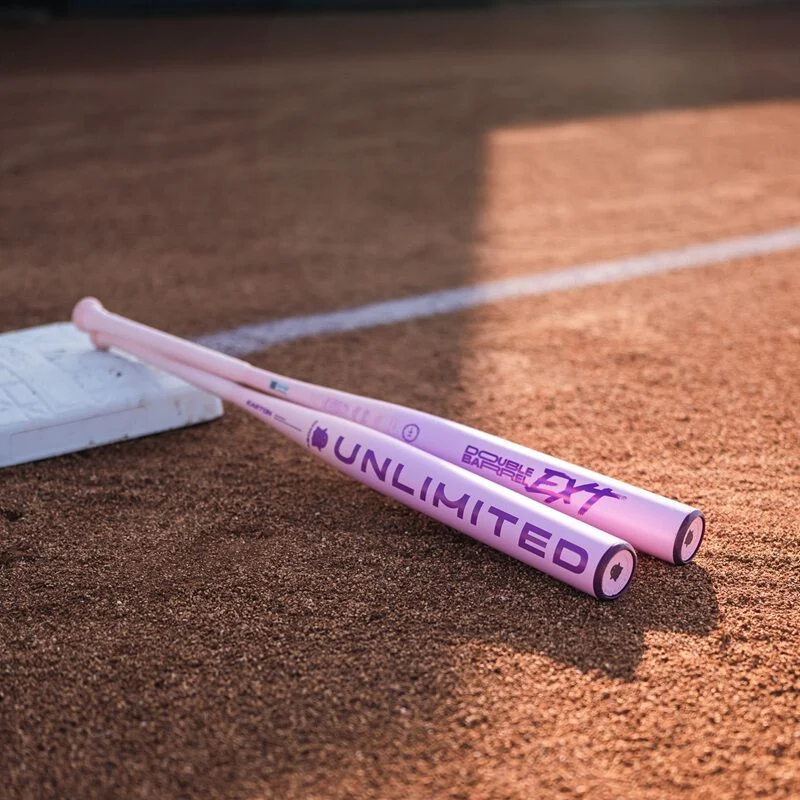
The quick answer
A balanced bat keeps its mass distribution less concentrated toward the barrel; an end-loaded bat places more emphasis toward that end. We recommend starting with a manageable balanced option when control is the priority, then comparing end load in the same length and stated weight if the player likes that feel. Neither label guarantees more distance.
At a glance
| Buying question | Balanced | End-loaded |
|---|---|---|
| Where is the emphasis? | Less barrel-end concentration | More barrel-end concentration |
| Why try it? | Compare a more manageable barrel feel | Compare a more barrel-heavy feel |
| What should stay equal? | Sport, length, stated weight, standard | Sport, length, stated weight, standard |
| What proves the fit? | Repeatable comfortable swings | Repeatable comfortable swings |
Ounces and swing feel answer different questions
Stated weight tells you the label’s total ounces. It does not tell you how those ounces are distributed along the bat. Mass farther from the hands changes the effort involved in moving the barrel, which is why equal-weight bats can feel different.
For a fair trial, keep the intended length and drop consistent. If you compare a shorter balanced bat with a longer end-loaded one, you are changing more than balance. The result may still tell you which bat you prefer, but it does not isolate why.
Start with the task you want the bat to do
A player who struggles to put the barrel where intended has a clear reason to compare a more manageable option. A player who already controls the current size may want to explore a barrel-heavy feel. Those are better starting points than assigning every contact hitter to one label and every power hitter to the other.
In slowpitch, end load is often prominent in the way models are marketed. Fastpitch and baseball also include varied swing-weight designs. Read the exact model description; the sport alone does not decide the balance of every bat in that category.
How to compare the two in practice
Use an appropriate supervised session and the correct balls. Alternate manageable rounds with the two bats, noting whether the player maintains control without having to force a different setup. Ask about the feel of the barrel at the start and end of the session.
A coach can help evaluate the swing, while the player should explain what feels comfortable. Keep the notes specific: exact length, stated ounces, model, and balance label. “The heavier-feeling one” is not enough information to order the same version later.
Read marketing labels in context
Balanced, mid-load, and end-loaded are useful product descriptions, but brands may not apply them on a common measurement scale. A numerical swing-weight scale from one maker should not be treated as a universal comparison with another maker’s scale.
Our recommendation is to buy the version the player can use consistently in the right competition. A larger end load is not an achievement to progress toward automatically. Check certification, final price, and return terms after settling the fitting question, rather than letting a sale choose the balance for you.
Your questions, answered.
Does an end-loaded bat always hit farther?
No. End load changes swing feel; the result still depends on the player, exact bat, and contact. A distance guarantee cannot be inferred from the label.
Can two 26-ounce bats feel different?
Yes. Length, construction, and mass distribution can change the feel even when stated ounces match.
Is a balanced bat just for beginners?
No. Experienced players may prefer its feel too. Choose for the player’s control and preferences rather than a skill-level stereotype.
Should I compare balance at the same length?
Yes, when possible. Keeping length and stated weight consistent makes it easier to judge the balance difference.
Sources & further reading
Louisville Slugger: choosing a baseball bat ↗Louisville Slugger: swing-weight explanation ↗Sources reviewed . For equipment care, follow the instructions for your exact model. For competition use, check your governing body’s current rules.