The quick answer
A one-piece bat has a continuous main handle-and-barrel structure; a two-piece bat joins a separate handle and barrel through a connection. Either label needs to be read alongside material and swing weight. Two-piece does not automatically mean composite, and one-piece does not automatically mean alloy. Choose the exact design that fits your preferred feel.
At a glance
| Detail | What it tells you | What it does not settle |
|---|---|---|
| One-piece or two-piece | Main frame and connection arrangement | Barrel material or exact swing feel |
| Alloy, composite, or hybrid | Material configuration | Whether the bat fits your player |
| Balanced or end-loaded | Mass-distribution emphasis | League eligibility or stated weight |
What the connection is there to do
A two-piece design gives the manufacturer a connection point to tune the relationship between handle and barrel. Makers may describe how that joint manages feel, flex, or vibration. Those are design claims to evaluate in the exact model, not proof that every connected bat feels the same.
One-piece bats are often considered by players who prefer a more direct connection through the frame. However, grips, knobs, handle design, and other features can still affect comfort. Counting the pieces is a starting point rather than a complete description of what reaches your hands.
Keep material out of the shorthand
An alloy barrel and composite handle can appear together in a hybrid two-piece design. Composite construction can also appear in a one-piece frame. A shopping filter that treats one-piece as a synonym for aluminum will therefore miss relevant options.
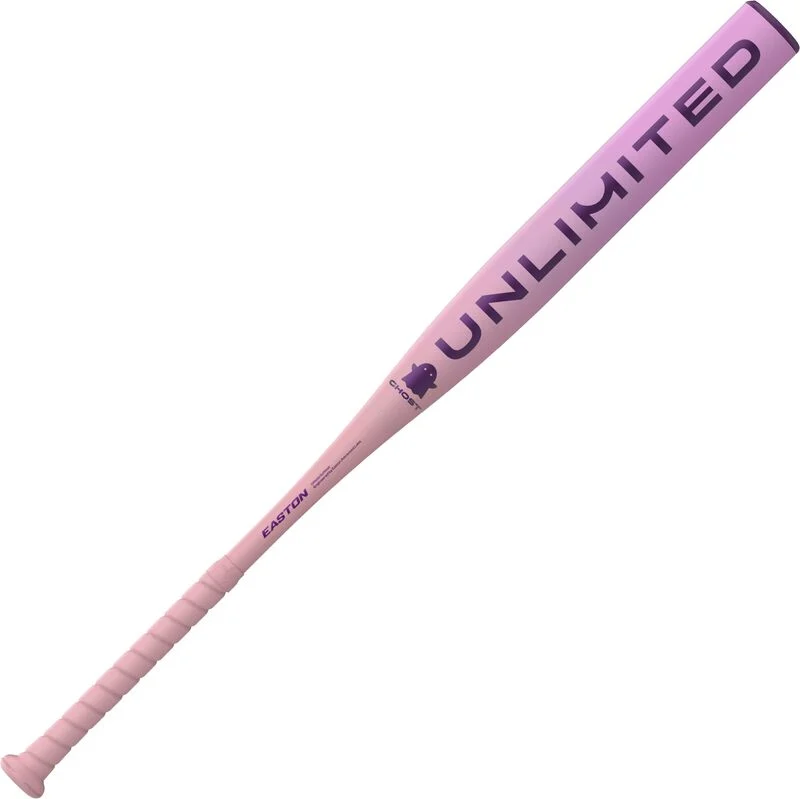
Our current reviews provide a useful contrast: the Rawlings Clout Ai BBCOR is a one-piece alloy baseball bat, while the Easton Ghost Unlimited is a one-piece composite fastpitch bat. They illustrate the vocabulary, not a head-to-head buying choice across two different sports.
Compare feel without changing every variable
Keep sport, certification, intended length, and stated weight as similar as practical. Then try the different connection designs in a suitable supervised session. If you also change to a longer, more end-loaded bat, a new sensation cannot be attributed to the connection alone.
Ask the player about comfortable grip, repeatable control, and the character of feedback. Do not judge a design by intentionally making painful contact or repeatedly hitting the wrong part of the barrel. A fitting should help the player choose, not attempt to manufacture a durability test.
Which would we put on your shortlist?
Start with one-piece designs if the player already likes a connected, direct frame feel. Include two-piece designs when the player wants to explore a different handle-and-barrel relationship. Within either group, compare more than one model if possible.
A two-piece price premium only makes sense if the complete bat suits the player. Likewise, a one-piece bat should not be dismissed as basic equipment. Get certification, size, condition, and warranty right before deciding whether the construction is worth paying for.
Your questions, answered.
Are all two-piece bats composite?
No. Hybrid designs can pair an alloy barrel with a composite handle. Read the material specification for the exact model.
Is one-piece always alloy?
No. One-piece composite bats exist, including the Ghost Unlimited fastpitch design covered on this site.
Does two-piece guarantee no hand sting?
No. A connection can be designed to manage vibration, but comfort also depends on the model, grip, contact, and player.
Is two-piece better for everyone?
No. Preferred feel, size, swing weight, budget, and competition requirements determine the useful choice.
Sources & further reading
Louisville Slugger: choosing a baseball bat ↗Easton: Ghost Unlimited construction ↗Easton: Ghost Advanced construction ↗Sources reviewed . For equipment care, follow the instructions for your exact model. For competition use, check your governing body’s current rules.