
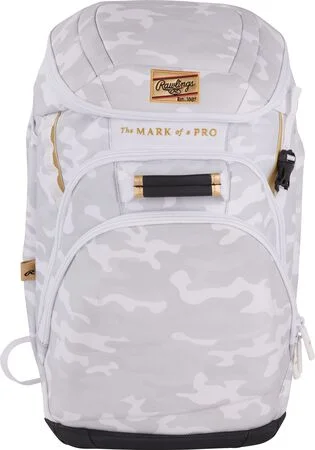
The quick answer
Lay out the full equipment load, check the longest bat and bulkiest item, and compare the way you actually travel to the field. A backpack suits a manageable player load; a duffel or wheeled bag can suit larger or catcher-specific loads. Dimensions and compartment layout matter more than the bag’s generic size label.
At a glance
| Format | Consider it when | Check before buying |
|---|---|---|
| Backpack | The player carries a manageable personal load | Helmet space, bat sleeves, loaded strap fit |
| Duffel | You want a larger open compartment | Loaded carrying comfort and equipment organization |
| Wheeled bag | The full load makes carrying inconvenient | Route surface, stairs, vehicle space and wheel access |
Build a packing list before a shortlist
Lay out the bat or bats, fielding glove, batting gloves, helmet, footwear, water bottle, and any role-specific gear the player actually transports. A catcher should include their complete protective set, not assume it will fit because a listing says large.
Separate personal equipment from team equipment. If the coach carries the balls and shared gear, the player may not need capacity for those items. Conversely, a bag used to transport training tools has a different job from a player’s everyday backpack.
Measure the awkward items
Check the longest bat, the helmet’s shape, the shoes, and any catcher’s gear against the stated compartments. Exterior dimensions do not necessarily describe the clear opening or usable space inside a pocket. Read the compartment details and ask the seller if a crucial fit is unclear.
A layout photo can help you understand access, but do not treat it as proof that your particular gear combination fits. Different helmet and shoe sizes change the load. A physically bulky but light item can be the limiting factor before the bag reaches any claimed capacity.
Choose a carrying format for the whole route
A wheeled bag may be convenient on a suitable path but still has to get through stairs, a car trunk, or a crowded storage area. A backpack may be easier for the route yet awkward when heavily loaded. Think about the entire trip rather than only the walk beside the dugout.
Where a store allows it, assess the straps or handles with a representative load. For an online purchase, read returns and exact dimensions before removing tags. The best choice is the one the player can manage in ordinary use, not the largest bag available.
Organization and care make capacity useful
Look for compartments that suit the equipment you want to separate, such as shoes and clean personal items. Ventilation and removable panels are model-specific features; read the actual description rather than assuming every sports bag includes them.
After practice, unpack wet or dirty equipment and follow each item’s care instructions. Do not leave a damp glove crushed beneath shoes simply because everything fits. Our glove-care guide covers storage separately. We recommend settling usable layout and carrying comfort before choosing embroidery or a colorway.
Your questions, answered.
Does every baseball backpack fit a helmet?
No. Check the model’s compartment layout and the size of your helmet, especially with attached accessories.
Does a catcher need a wheeled bag?
Not always. Start with the complete gear load and route, then compare a suitable backpack, duffel, or wheeled design.
Can I use the same type of bag for softball?
Yes, if the actual equipment fits and the carrying format suits the player. Check the packing list rather than the sport name alone.
Should I leave wet equipment packed overnight?
Unpack it and follow its drying and storage instructions. A closed bag is not a substitute for proper glove and gear care.
Sources & further reading
Rawlings: equipment-bag formats and compartments ↗Walden Glove: conditioning and leather care ↗Sources reviewed . For equipment care, follow the instructions for your exact model. For competition use, check your governing body’s current rules.