The quick answer
Check the competition’s footwear rules and the surface or facility policy before choosing metal cleats, molded cleats, or turf shoes. Then compare the actual shoe fit and intended surface use. A division may allow metal while a particular training facility prohibits it, so the two checks belong together.
At a glance
| Type | First buying check | Second buying check |
|---|---|---|
| Metal cleats | Does the division permit metal? | Does the field or training venue permit it? |
| Molded cleats | Does the model suit the playing surface? | Does the actual size and width fit? |
| Turf shoes | Does the venue recommend this outsole type? | Does it suit the intended activity and fit? |
League rules come before outsole preference
Get the rules for the player’s current division, not just a general statement about baseball or softball. Little League’s help-center guidance distinguishes Majors and below from Intermediate 50/70, Junior, and Senior play. That is a specific program example, not a universal age cutoff for every association.
If the player moves between teams or events, check each relevant rule set. A previous season’s accepted shoe is not enough evidence for the next competition. Record the division and venue beside the shoe shortlist so the decision is easy to check.
The facility may add its own restriction
Ask the field, indoor cage, or training facility which outsole types it permits. The answer can differ from game-day rules, especially when the surface or mound has its own care requirements. Do not infer permission from the fact that the same team plays there.
For a player who trains indoors and competes outdoors, a separate practice shoe may make the equipment plan clearer. That is a usage decision, not an automatic requirement to buy two pairs. First find out whether one permitted model can actually serve the intended activities.
Try the footwear as you will wear it
Use the intended socks and check both feet. Confirm space at the toes, a comfortable forefoot, and heel security using the brand’s fitting guidance. A familiar street-shoe number is a starting point rather than a guarantee across different cleat models.
Where the seller permits an indoor fitting, compare normal walking and controlled movement without taking the shoes onto a surface that would affect returns. Persistent discomfort is a reason to try a different size, width, or model, not to assume the shoe must be suitable because an athlete wears it.
Choose the model for its intended surface
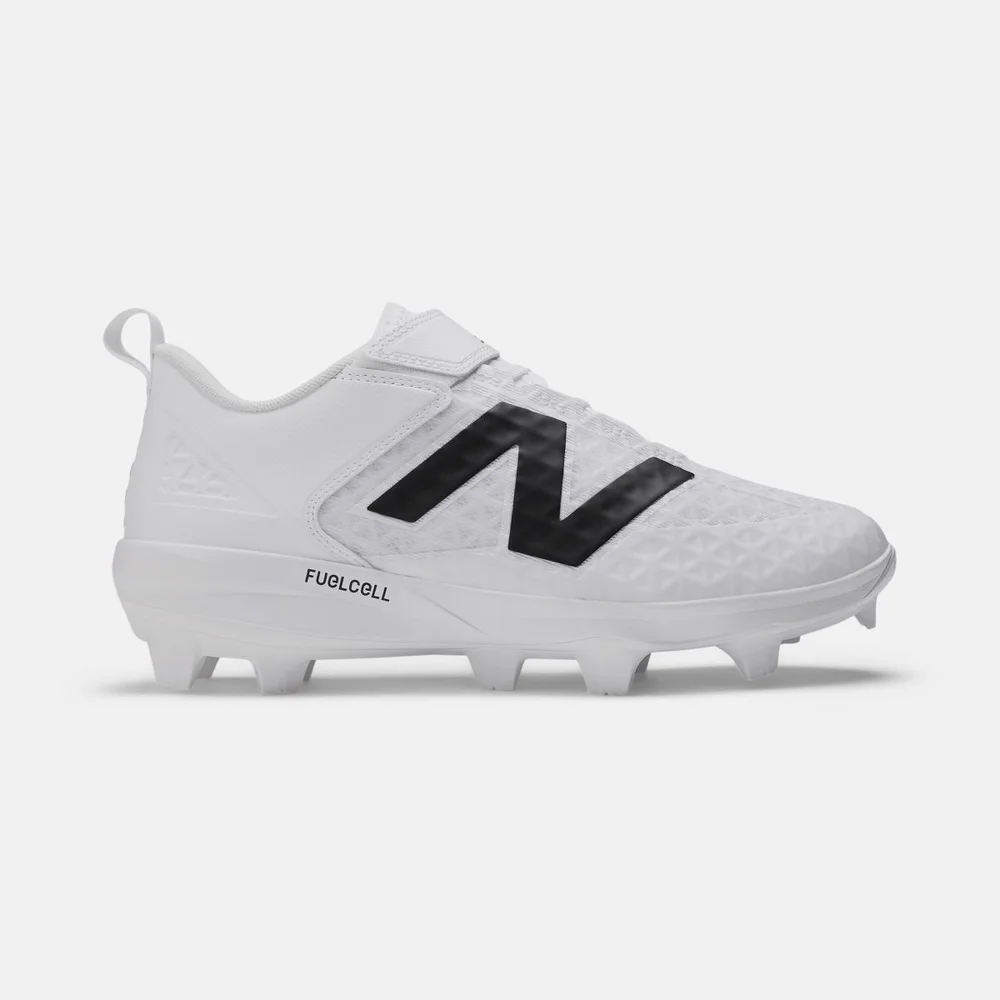
New Balance separates metal, molded, and turf offerings in its baseball range. Treat those as different intended-use categories and read the individual description. Neither metal nor molded automatically means the best option for every field condition.
We recommend choosing the legal, venue-approved category first, then the comfortable model within it. Include return terms and expected use in the comparison. Avoid paying for an outsole you cannot wear at the player’s main venue, even if its product page sounds more advanced.
Your questions, answered.
Can young Little League players wear metal cleats?
Little League’s published guidance prohibits metal in Majors and below and describes permitted use for Intermediate 50/70, Junior, and Senior. Confirm the current rule for the exact division.
Does league approval override an indoor facility rule?
Do not assume that. Check the facility’s own footwear policy for the surface and activity.
Are turf shoes the same as molded cleats?
No. They are separate outsole categories. Read the model’s intended use and the venue’s policy.
Should cleats fit exactly like my everyday shoes?
Check the actual model with your intended socks. Size, width, and fit can vary between footwear designs.
Sources & further reading
Little League: metal-cleat rules by division ↗New Balance: metal, molded, and turf baseball footwear ↗Sources reviewed . For equipment care, follow the instructions for your exact model. For competition use, check your governing body’s current rules.