
The quick answer
Start with a suitable tee height, an appropriate bat and ball, a clear hitting area, and a properly positioned net. Use short rounds to check setup, contact, and repeatability, changing one variable at a time. The practice plan below is a starting structure to discuss with a coach, not a promise of a particular swing result.
At a glance
| Round | Focus | What to notice |
|---|---|---|
| Setup check | Comfortable stance and useful tee height | Can the player reach the ball without crowding it? |
| Contact awareness | A controlled swing with a clear task | Is contact with the ball or mostly with the tee? |
| Repeat the routine | Reset the same way before each swing | Does the setup change unintentionally? |
| One-variable change | A coach-selected height or location adjustment | What changed when only that detail moved? |
Step by step
Prepare the station
Follow the tee and net instructions, check full swing clearance and the ball path, and keep people out of the hitting area. Use appropriate supervision and equipment.
Choose a starting contact point
Set the ball at a height and distance suited to the player. Little League’s introductory guidance uses a ball slightly below the beltline as a starting reference.
Use a short focused round
Choose one cue with the coach. Let the player reset between swings instead of rushing through a pile of balls.
Review before adding difficulty
Ask what felt repeatable. Change one part of the setup only when the player understands the purpose.
First make the setup usable
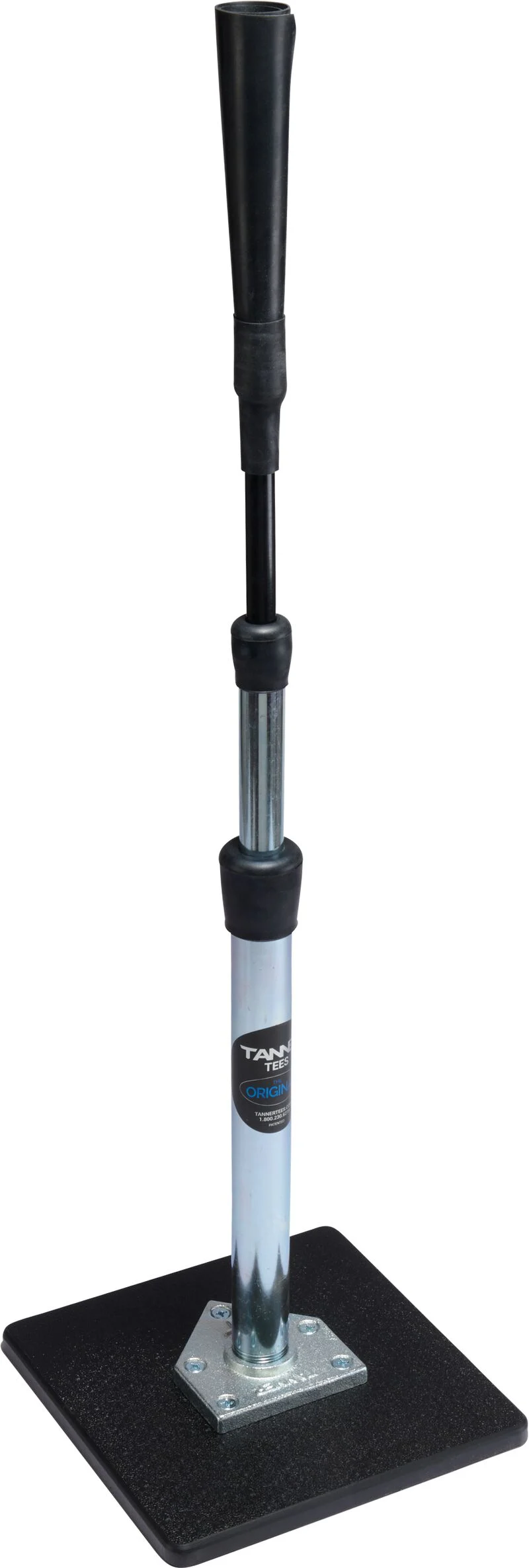
A tee needs to reach the player’s intended contact points. The adult Tanner Original adjusts from 26 to 43 inches, so check that range against the actual player. A shorter model may be more useful for a young player or a low-contact drill.
Plan the whole station rather than the tee in isolation. Check swing clearance, the net’s required setback, the direction of the hit, and a safe route to collect balls after the hitter stops. Follow the equipment instructions; a small product footprint does not describe the space required to swing.
Use the first round to find a repeatable setup
Ask the player to take the same comfortable stance before each swing. A coach can help position the tee so the hitter is not reaching awkwardly or standing so close that the barrel cannot travel through the contact area.
For a beginner, the useful question is whether the starting setup can be repeated. If the tee, feet, and grip all move between swings, it becomes difficult to know what caused a different result. Reset deliberately instead of immediately adding a more complicated drill.
Keep contact work specific
Choose one task for the next short round. It could be noticing ball contact rather than repeatedly striking the top of the tee, or following a coach’s contact-position cue. The task should be understandable without a long list of mechanical instructions.
Little League publishes a pause-before-contact progression for coached youth practice. Use coaching guidance appropriate to the player rather than attempting every drill at once. Baseball and softball hitters should also use the ball and bat intended for their own session.
Progress by changing one detail
Once the setup is repeatable, a coach may change a contact height or location for a specific purpose. Keep the other conditions as steady as practical and ask the player what changed. Do not increase speed and move the tee at the same time if you want a clear comparison.
End the session before the player is simply rushing or losing control. Record one useful observation for the next practice rather than claiming a single tee session fixed the swing. When moving to tossed or pitched balls, remember that timing becomes a new part of the task.
Your questions, answered.
How high should a batting tee be?
Set it for the intended contact point and the player. Little League’s introductory reference is slightly below the beltline; specific drills and players can require a different height.
How many swings should a beginner take?
Use a manageable short round agreed with the coach. Stop or simplify when control and attention deteriorate rather than chasing a universal swing count.
Can a softball player use a batting tee?
Yes, with a suitable tee and the correct ball, bat, contact setup, and practice space. Tanner lists both baseball and softball for the Original.
Does tee work replace live pitching?
No. A tee supports stationary-contact work. Tossed and pitched balls introduce timing and other demands that the tee does not reproduce.
Sources & further reading
Little League University: tee setup and contact work ↗Tanner: Original tee height and construction ↗Sources reviewed . For equipment care, follow the instructions for your exact model. For competition use, check your governing body’s current rules.